
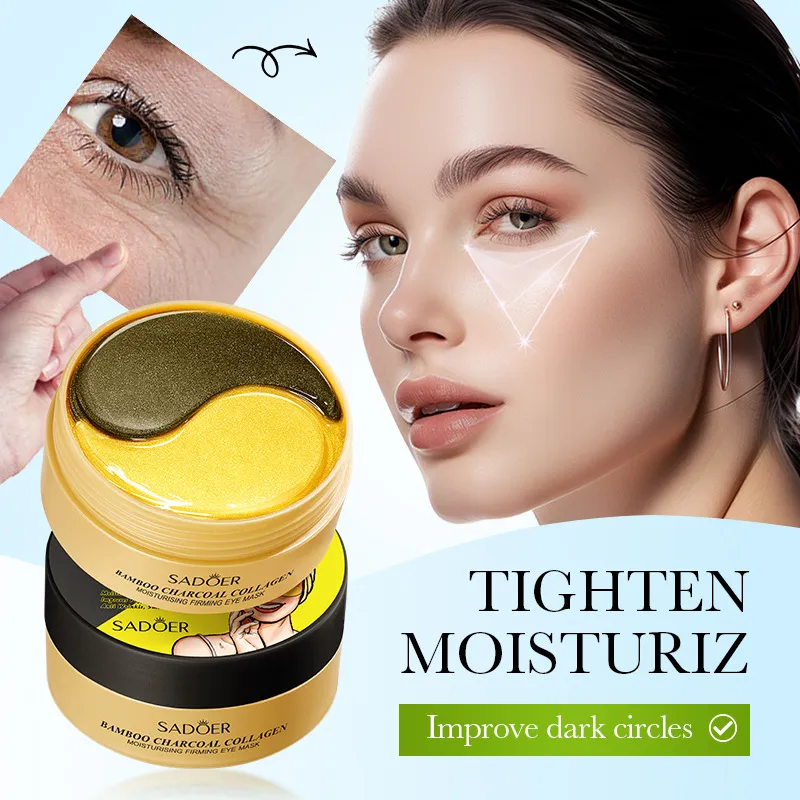
In the crowded world of eye creams and serums, a new contender has emerged: the single-use collagen mask. These sheet masks, soaked in serums and often paired with fragrant ingredients like lavender, promise a quick fix for firming and hydrating the delicate eye area. But how much of this is clever marketing, and what does the science actually say about applying collagen topically? Let’s break down the claims behind these popular treatments.
What Is Hydrolyzed Collagen?
When we talk about collagen in skincare, we’re almost always referring to hydrolyzed collagen, sometimes listed as collagen peptides or soluble collagen. Collagen itself is a massive, fibrous protein that forms the scaffolding of our skin, giving it structure and bounce. The problem is that these intact collagen molecules are far too large to penetrate the skin’s barrier.
Hydrolyzed collagen is the solution to this problem. Through a chemical or enzymatic process called hydrolysis, the long collagen protein chains are broken down into much smaller peptides and amino acids. These fragments are low enough in molecular weight to be absorbed into the upper layers of the skin, where they can act as humectants—attracting and holding water. This process transforms the collagen into a functional cosmetic ingredient rather than a structural one. At the cellular level, these small peptides may also send signals to fibroblasts, the skin cells responsible for producing our own natural collagen, although this signaling effect is less conclusively proven for topical application compared to oral supplements.
The Evidence
The science supporting topical hydrolyzed collagen focuses on hydration and barrier support rather than direct “firming.” A 2022 review in the Journal of Cosmetic Dermatology analyzed several studies on collagen-derived ingredients. It concluded that hydrolyzed collagen consistently improves skin hydration and elasticity measurements when used over time, largely due to its excellent water-binding capacity. The immediate “plumping” effect many users feel is a direct result of this intense hydration.
Another study, this one from 2023 published in Skin Pharmacology and Physiology, tested a hydrogel patch containing hydrolyzed collagen and hyaluronic acid. Researchers found that the combination significantly reduced transepidermal water loss (a key measure of barrier health) and improved skin smoothness around the eye area after four weeks of use. It’s important to note that these benefits are synergistic; collagen peptides work best when paired with other hydrators.
How SADOER’s Eye Mask Uses It
The SADOER Lavender Collagen Eye Mask presents a classic example of hydrolyzed collagen in a targeted delivery system. The mask format itself is a key part of the strategy. By creating an occlusive barrier, the sheet mask prevents the serum from evaporating, forcing hydration into the skin and allowing for longer contact time with the active ingredients.
While the exact concentration of hydrolyzed collagen isn’t disclosed, its placement high on the ingredient list suggests it’s a primary component. The formula pairs it with other supportive players. You’ll likely find hyaluronic acid or sodium hyaluronate, a superstar humectant, working alongside the collagen peptides to pull moisture into the skin. The inclusion of lavender oil or lavender extract is primarily for fragrance and a soothing sensory experience. From a formulation standpoint, this mask is engineered for an immediate, noticeable sensory payoff—cooling, hydrating, and temporarily tightening the skin.
For more on this topic, check out SADOER Vitamin C Eye Mask Review: An Honest Look at the Hype.
Who Should (and Shouldn’t) Use It
These masks are best suited for individuals looking for a quick hydration boost or a pre-event treatment to reduce the appearance of fine lines caused by dryness. If your main concerns around the eyes are dehydration, puffiness from fatigue, or a lack of radiance, a collagen mask can offer a temporary but satisfying solution.
However, if you are seeking long-term correction of deep wrinkles, significant loss of elasticity, or volume depletion, this product is not the answer. The effects are primarily superficial and temporary, lasting from a few hours to a day. People with very sensitive skin or allergies to fragrance should approach with caution. The lavender, while calming for some, is a potential irritant for others, especially in the thin eye area. Those with active eczema or rosacea on the eyelids should avoid fragranced masks altogether.
The Bottom Line
Topical hydrolyzed collagen, as found in products like the SADOER Lavender Collagen Eye Mask, is an effective hydrating agent. It delivers a real, measurable improvement in skin moisture and can create a visible, short-term plumping effect that makes lines appear diminished. Think of it as a powerful hydrating treatment rather than a collagen-rebuilding miracle.
For the best results, manage your expectations. This is a cosmetic moisturizing treatment, not a medical-grade intervention. Its value lies in the immediate aesthetic improvement and the ritualistic self-care experience it provides. For sustained skin health and collagen support, a consistent routine with proven actives like retinoids, vitamin C (as ascorbic acid or other stable derivatives), and daily sunscreen is irreplaceable. More research is needed on long-term effects of consistent topical collagen peptide use on endogenous collagen production, but for a quick hydration fix, the science of humectancy is sound.

